

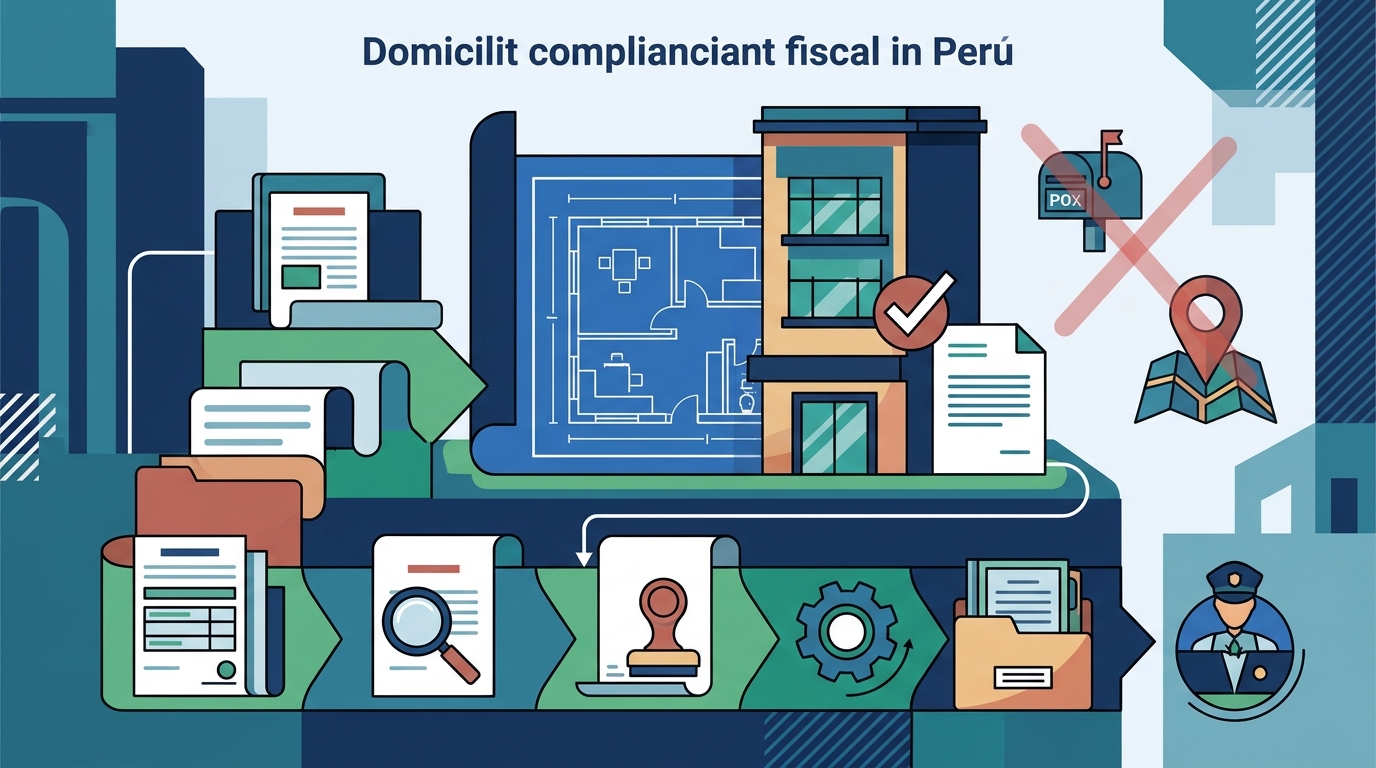
Peruvian tax law requires every registered company to declare a physical address for its fiscal domicile. A P.O. box or a foreign address is not accepted by the tax authority. This guide outlines the specific actions required to secure a compliant location for your business.
1. Verify Your Current Registration Status
Confirm your company is active in the public registry before addressing tax location.
Before you can establish a fiscal domicile, your company must hold a valid RUC (tax ID) and be registered with the public corporate registry. If your company is newly incorporated, ensure the registration process is fully complete. This foundational step ensures that any subsequent address changes are legally recognized by the state.
2. Select a Physical Location in Peru
Choose a real, verifiable address within Peruvian territory.
A fiscal domicile is a physical location where the company is legally established for tax purposes. It cannot be a virtual office, a P.O. box, or an address located outside of Peru. The location must be capable of receiving official correspondence from the tax authority. Many foreign entrepreneurs opt for a registered address in a major business district to maintain a professional presence.
3. Secure a Lease or Service Agreement
Formalize your right to use the space with a written contract.
You need a legal basis for occupying the address. This is typically a lease agreement or a service contract with a provider that offers fiscal domicile services. The contract should clearly state that the address is designated for your company's fiscal purposes. This document serves as proof of your legal standing at that location if the tax authority requests verification.
4. Prepare the Required Documentation
Gather the specific forms and supporting documents for the address change.
The tax authority requires specific forms to register or update your fiscal domicile. You will need the signed lease or service agreement, identification documents for the company representatives, and the specific tax forms for address modification. Ensuring all documents are signed by the authorized legal representative is critical to avoid processing delays.
5. File the Notification with the Tax Authority
Submit the address details to the national tax agency.
Once your documents are ready, you must file the notification with the tax authority. This process is typically done electronically through the agency's online portal. The filing officially informs the government of your new physical location. It is essential to complete this step to remain in good standing and avoid penalties for non-compliance.
6. Confirm Receipt of Official Correspondence
Ensure you have a system to receive and forward official mail.
One of the primary functions of a fiscal domicile is to receive official notices, audits, and demands from the tax authority. If you use a service provider for your address, they should offer a service to receive and forward this correspondence to you. You must be able to demonstrate that you are actively monitoring this address for official communications.
7. Maintain Ongoing Compliance
Keep your address details current and your service active.
A fiscal domicile is not a one-time setup. You must ensure that your lease or service agreement remains active and that your registered address with the tax authority matches your current physical location. If you move, you must repeat the notification process. Maintaining this compliance is an ongoing obligation for any foreign-owned company operating in Peru.
Choosing the Right Approach
When selecting how to establish your fiscal domicile, consider your operational needs. If you have a physical office in Peru, use that address. If you are operating remotely, a dedicated fiscal domicile service provides the necessary compliance without the overhead of a full office lease. The key is ensuring the address is real, verifiable, and capable of receiving official state correspondence.
Frequently Asked Questions
Can I use a P.O. box as my fiscal domicile in Peru?
No. Peruvian tax law requires a physical address. A P.O. box or a foreign address is not accepted as a valid fiscal domicile. You must have a real location within Peru that can receive official mail.
Do I need to be physically present in Peru to set up a fiscal domicile?
No. You can establish a fiscal domicile remotely. By using a power of attorney and working with a local legal representative, you can manage the address registration and compliance from abroad.
What happens if I do not have a valid fiscal domicile?
Your company may be flagged for non-compliance by the tax authority. This can lead to penalties, fines, or the suspension of your ability to issue invoices and operate legally in Peru.
Can I use my home address in Peru as a fiscal domicile?
Yes, provided it is a physical address in Peru and you have the legal right to use it for business purposes. However, many foreign investors prefer a commercial address in a business district for professional reasons.
How often do I need to update my fiscal domicile?
You must update your fiscal domicile whenever you change your physical location. If you move your office or change your service provider, you must file a new notification with the tax authority to reflect the new address.
Is a fiscal domicile the same as a registered office?
They are related but distinct. A registered office is where the company is legally incorporated. A fiscal domicile is the specific address declared to the tax authority for tax purposes. While they are often the same, they can be different if you have multiple locations.
Next Steps
Establishing a valid fiscal domicile is a critical component of operating a compliant business in Peru. By following these seven steps, you ensure that your company meets the physical address requirements of the tax authority. For assistance with this process, set up your fiscal domicile with Peru Legal Setup.