

Incorporating a business in Peru requires registering a legal entity with SUNARP, obtaining a tax ID from SUNAT, and securing a fiscal domicile. You can complete this process entirely remotely using a Consular Power of Attorney. This guide covers the specific steps, costs, and legal structures you need to know in 2026.
How to Choose a Legal Structure
Choosing the right entity is the first critical decision. The Sociedad Anónima Cerrada (S.A.C.) is the most common structure for foreign investors. It is a closely held corporation that does not require a board of directors. This makes governance simpler and faster to manage.
Another option is the Empresa Individual de Responsabilidad Limitada (E.I.R.L.). This is a sole-owner company limited to one natural person. It is ideal for individual entrepreneurs who want liability protection without a partner. For larger operations, the Sociedad Anónima (S.A.) is used, but it requires a board and is more complex.
Peru allows 100% foreign ownership in virtually every sector. You do not need a local partner to own your company. This is a significant advantage over some other Latin American markets. The S.A.C. is generally the best fit for most foreign subsidiaries and trading companies.
What to Ask Before Committing
Before you sign any agreement with a service provider, you must ask specific questions. First, ask if they can handle the entire process remotely. You should not need to travel to Lima for a standard incorporation. Second, ask about the fiscal domicile. Does the provider offer a real address in a commercial zone like Miraflores? A virtual mailbox is not enough for tax compliance.
Third, ask about the legal representative. Peruvian law requires a local representative for tax purposes. Ask if they provide a dedicated representative or if you must hire one separately. Finally, ask about the timeline. A standard incorporation should take 3 to 6 weeks. If a provider promises it in 3 days, be skeptical.
How to Verify Credentials
Verifying the credentials of your legal partner is essential. In Peru, only licensed lawyers can provide legal advice and represent clients before the state. You can verify a lawyer's license through the Colegio de Abogados de Lima. Ensure the person you are working with is a registered attorney and not just a business consultant.
You should also verify the company's registration. Ask for the RUC (Tax ID) of the service provider. You can check this on the SUNAT website to ensure they are an active taxpayer. A legitimate firm will have no issue providing this information. This step protects you from fraud and ensures you are working with a professional entity.
How the Process Works
The incorporation process follows a strict sequence of steps. It begins with the preparation of documents and ends with the opening of a bank account. Understanding this sequence helps you manage expectations and prepare the necessary paperwork.
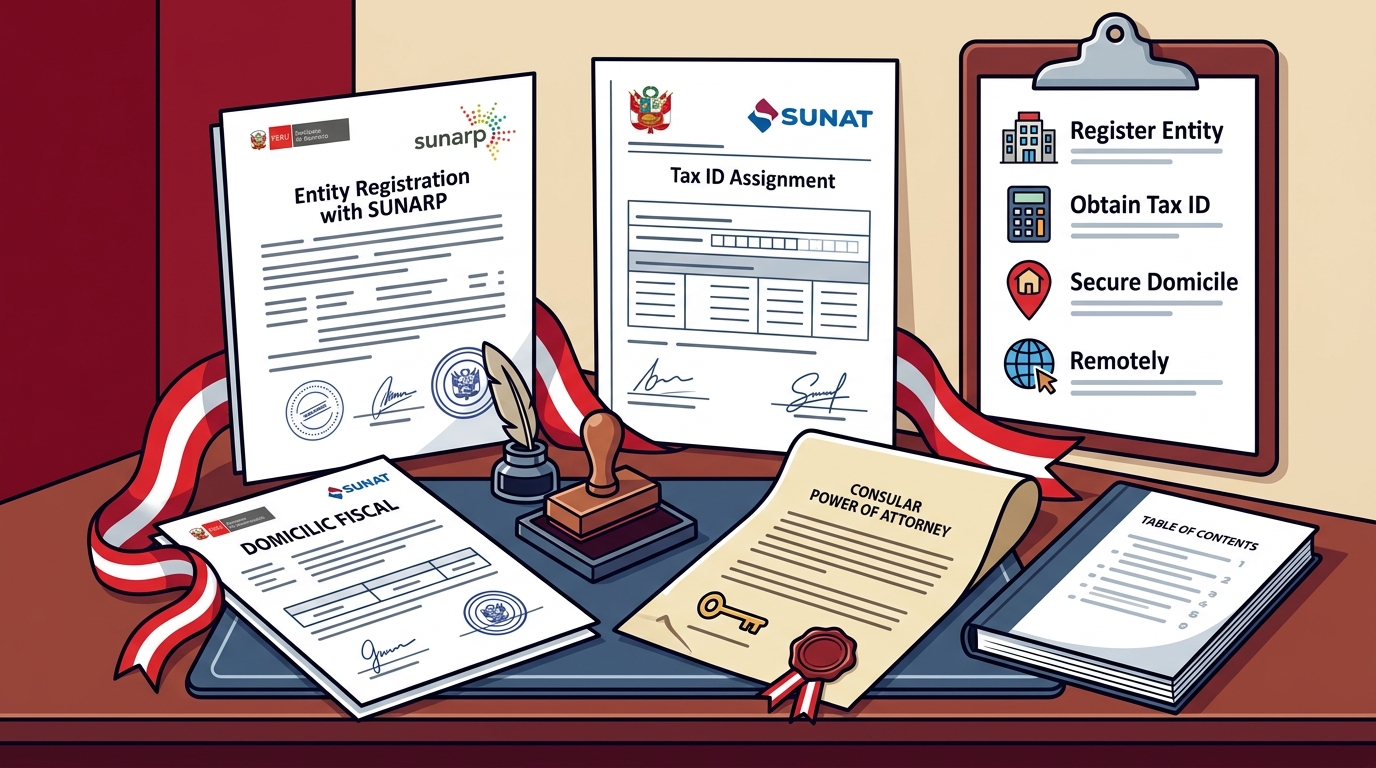
Step 1: Power of Attorney
If you are abroad, you must grant a Power of Attorney to a local representative. This document must be signed before a Peruvian Consulate in your home country. It authorizes your representative to sign the incorporation documents on your behalf. This is the most critical document for remote setup.
Step 2: Name Reservation and Bylaws
Next, you reserve the company name with SUNARP. You must also draft the bylaws, which define the company's purpose, capital, and management structure. These documents are reviewed and approved before the next step.
Step 3: Public Deed and Registration
The bylaws are signed in a public deed before a notary. This deed is then registered with SUNARP. Registration typically takes up to 7 business days. Once registered, the company legally exists.
Step 4: Tax ID and Bank Account
After registration, you obtain the RUC from SUNAT. This is your tax ID. Finally, you open a corporate bank account to deposit the share capital. The company is now fully operational.
What It Costs
The cost of incorporating a company in Peru varies based on the structure and services required. There is no minimum share capital requirement for an S.A.C. or E.I.R.L. You can start with a nominal amount. The main costs are legal fees, notary fees, and registration fees.
Legal fees cover the drafting of documents and the management of the process. Notary fees are fixed by the state and are relatively low. Registration fees with SUNARP are also fixed. You should also budget for the fiscal domicile and legal representative, which are ongoing monthly costs. These are not one-time fees but recurring obligations.
Common Mistakes to Avoid
Many foreign entrepreneurs make avoidable mistakes during incorporation. The most common error is using the wrong visa category. A business visa does not allow you to work for your company. If you plan to manage the business from Peru, you need a work visa. Getting this wrong can lead to fines and deportation.
Another mistake is ignoring the fiscal domicile requirement. If your company does not have a registered address, SUNAT can suspend your tax ID. This stops you from issuing invoices. Finally, failing to appoint a legal representative is a compliance violation. You must have a local representative at all times.
Versus Alternatives
For Specific Situations
Your specific situation may require a different approach. If you are a sole entrepreneur, the E.I.R.L. is the best choice. It allows you to own 100% of the company and limits your personal liability. If you are a corporation looking to enter the market, an S.A.C. is the standard choice for a subsidiary.
If you plan to hire local staff, you must consider labor laws. Peru has strict labor regulations, including mandatory benefits and severance pay. You should consult with a labor lawyer before hiring. If you are in a regulated sector, such as mining or finance, you may need additional permits from specific agencies.
Rules and Protections
Peruvian corporate law provides strong protections for shareholders. The limited liability structure means your personal assets are protected from company debts. This is a key advantage of incorporating as an S.A.C. or E.I.R.L. The law also protects intellectual property and contracts.
However, you must comply with tax and labor laws. SUNAT is the tax authority and enforces strict compliance. Failure to file taxes or pay social security contributions can result in heavy fines. You must also comply with data privacy laws if you handle personal data. These rules are designed to protect both the state and the public.
Local Specifics
Peru has specific local requirements that differ from other countries. The fiscal domicile must be a real address in a commercial zone. Residential addresses are not accepted for corporate tax purposes. Miraflores and San Isidro are popular districts for this purpose due to their business infrastructure.
The legal representative must be a resident in Peru. They are responsible for receiving legal and tax notifications. This person must be available to sign documents when required. Understanding these local specifics is crucial for maintaining good standing with the authorities.
Timing and Deadlines
Timing is critical in the incorporation process. The Power of Attorney must be valid when you sign the public deed. Consular documents typically have a validity period of 3 to 6 months. You should plan your timeline accordingly to avoid delays. If the document expires, you must renew it, which can add weeks to the process.
Bank account opening can also take time. Some banks require the director to be present in person. Others allow remote opening with video verification. You should check the bank's requirements early in the process. Planning for these timelines ensures a smooth incorporation.
Results Over Time
Once incorporated, your company must maintain ongoing compliance. This includes filing monthly tax returns and annual financial statements. You must also renew your fiscal domicile and legal representative services. These are recurring obligations that require consistent management.
Over time, a compliant company builds a credit history in Peru. This makes it easier to obtain loans and contracts. It also demonstrates stability to partners and customers. Maintaining good standing is the key to long-term success in the Peruvian market.
Key Takeaways
- The S.A.C. is the most common structure for foreign investors in Peru.
- You can incorporate a company entirely remotely using a Consular Power of Attorney.
- A fiscal domicile and legal representative are mandatory ongoing requirements.
- The standard incorporation timeline is 3 to 6 weeks.
- There is no minimum share capital requirement for S.A.C. or E.I.R.L. entities.
- Peru allows 100% foreign ownership in most sectors.
- You must verify your legal provider's credentials through the Colegio de Abogados.
- Business visas do not allow you to work for your company; you need a work visa.
Frequently Asked Questions
Can I incorporate a company in Peru without traveling there?
Yes, you can incorporate a company in Peru entirely remotely. You need to sign a Power of Attorney before a Peruvian Consulate in your home country. This authorizes a local representative to handle the process on your behalf.
What is the difference between an S.A.C. and an E.I.R.L.?
An S.A.C. is a closely held corporation that can have 2 to 20 shareholders. An E.I.R.L. is a sole-owner company limited to one natural person. The S.A.C. is better for partnerships, while the E.I.R.L. is for individual entrepreneurs.
How long does it take to incorporate a company in Peru?
A standard incorporation typically takes 3 to 6 weeks. This timeline includes name reservation, document drafting, notary signing, and SUNARP registration. The exact time depends on the completeness of your documents.
Do I need a local partner to own a company in Peru?
No, you do not need a local partner. Peru allows 100% foreign ownership in virtually every sector. You can own your company entirely without a Peruvian citizen as a shareholder.
What is a fiscal domicile in Peru?
A fiscal domicile is the registered address of your company for tax purposes. It must be a real address in a commercial zone. SUNAT requires every company to have a valid fiscal domicile to issue invoices.
Can I manage my Peruvian company from abroad?
Yes, you can manage your company from abroad. You do not need to be physically present in Peru to run the business. However, you must have a local legal representative for tax and legal matters.
What are the ongoing costs of maintaining a company in Peru?
Ongoing costs include the fiscal domicile, legal representative, and tax filing fees. These are monthly or annual expenses. You should budget for these recurring costs in addition to the initial incorporation fees.
Do I need a visa to incorporate a company in Peru?
No, you do not need a visa to incorporate a company. You can do it remotely. However, if you plan to move to Peru to manage the business, you will need a work visa, not a business visa.
Start Your Peruvian Business with Peru Legal Setup
Peru Legal Setup provides the legal support you need to incorporate and operate your business in Peru. We handle the entire process remotely, from the Power of Attorney to the final bank account opening. Our team ensures you meet all compliance requirements without needing to travel to Lima. To plan your visit, book a free consultation with our team today.