

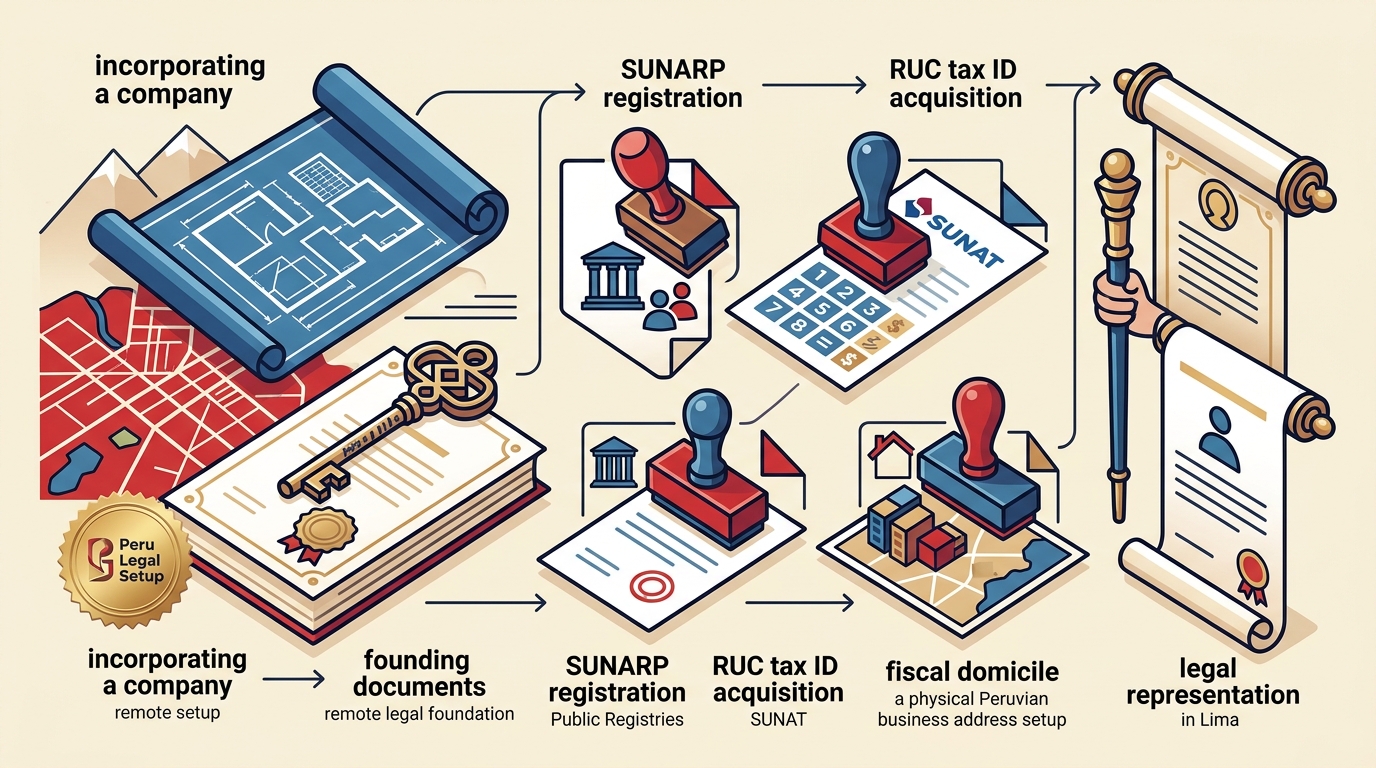
Peru Legal Setup offers end-to-end legal services for incorporating a company in Peru, including remote setup, SUNARP registration, RUC tax ID acquisition, fiscal domicile, and legal representation. This guide details how each service functions within the Peruvian legal framework to help foreign entrepreneurs establish a compliant business entity without relocating to Lima.
Remote Company Incorporation
Remote company incorporation is the process of establishing a legal entity in Peru without the physical presence of the founders in the country. Peru Legal Setup facilitates this by managing the entire workflow from document preparation to final registration. This approach allows international investors to launch their operations while remaining in their home jurisdictions.
The Consular Power of Attorney
The cornerstone of remote setup is the Consular Power of Attorney. This legal instrument allows a designated representative in Peru to sign documents on behalf of the foreign shareholders. The process begins with the shareholders signing the power before a Peruvian Consulate in their country of residence. Once notarized and apostilled, the document is sent to Peru for legalization.
Step-by-Step Remote Workflow
Peru Legal Setup coordinates the timeline to ensure all prerequisites are met before the formal registration steps begin. The workflow typically involves the following stages:
- Document Preparation: Drafting the bylaws and preparing the power of attorney.
- Consularization: The client signs the power at the local Peruvian Consulate.
- Legalization: The document is authenticated by the Ministry of Foreign Affairs in Peru.
- Execution: The representative signs the public deed before a notary in Lima.
This method eliminates the need for multiple international flights and reduces the administrative burden on the client. The firm ensures that all documents meet the strict formatting requirements of Peruvian notaries and registries.
SUNARP Registration
SUNARP registration is the formal act of inscribing a company in the Public Registry of Personal Property. This step grants the company its legal existence and personality under Peruvian law. Without this registration, a business cannot legally operate, sign contracts, or open bank accounts.
Role of the Public Registry
SUNARP (Superintendencia Nacional de los Registros Públicos) is the government agency responsible for maintaining the corporate registry. The registration process involves submitting the public deed of incorporation and other supporting documents. Once registered, the company receives a certificate of registration, which is the primary proof of its legal status.
Timeline and Requirements
The registration process typically takes up to 7 business days after the submission of the public deed. The firm monitors the status of the application to ensure timely completion. Key requirements for SUNARP registration include:
- A reserved and available company name.
- The signed public deed of incorporation.
- Proof of payment of the registration fee.
- Identification documents of the shareholders and officers.
Peru Legal Setup handles the submission and follow-up with SUNARP, ensuring that any discrepancies are resolved promptly. This proactive management helps avoid delays that can occur due to minor documentation errors.
RUC Tax Registration
RUC tax registration is the process of obtaining a unique tax identification number from SUNAT (Superintendencia Nacional de Aduanas y de Administración Tributaria). The RUC (Registro Único de Contribuyentes) is mandatory for any entity that conducts economic activity in Peru. It is required for issuing invoices, paying taxes, and interacting with government agencies.
Obtaining the RUC
After the company is registered with SUNARP, it must be enrolled in the RUC system. This step is distinct from corporate registration and is handled by SUNAT. The firm assists in the application process, ensuring that the company is correctly classified according to its economic activity. The RUC number is essential for opening a corporate bank account and beginning operations.
Tax Obligations and Compliance
Once the RUC is assigned, the company becomes subject to Peruvian tax laws. This includes obligations such as filing monthly tax returns and paying income tax. While Peru Legal Setup does not provide ongoing accounting services, it ensures that the company is properly registered with SUNAT and provides guidance on initial tax compliance. Clients are advised to engage a local accountant for ongoing financial reporting.
Fiscal Domicile
Fiscal domicile is the registered address of a company for tax and legal purposes. Peruvian law requires every company to have a valid fiscal domicile within the country. This address is used for receiving official correspondence from government agencies, including SUNAT and SUNARP. It is a critical component of maintaining good standing with regulatory bodies.
Why a Real Address Matters
Using a virtual office or a shared address that does not meet legal requirements can lead to penalties or the suspension of the company's RUC. Peru Legal Setup provides a real, registered address in Lima for the fiscal domicile of the client's company. This service includes the forwarding of all physical mail received at the address to the client's preferred location.
Service Inclusions
The fiscal domicile service is designed to ensure continuous compliance. It includes:
- A physical address in a commercial zone in Lima.
- Reception and scanning of official mail.
- Forwarding of documents to the client via digital or physical means.
- Assistance with any address-related queries from government agencies.
This service is particularly valuable for foreign entrepreneurs who do not have a physical presence in Peru. It ensures that the company remains reachable by authorities, which is a requirement for maintaining an active tax status.
Legal Representation
Legal representation is the appointment of a local individual or entity to act on behalf of a foreign-owned company in Peru. Peruvian corporate law requires every foreign-owned company to have a legal representative who is resident in the country. This representative is responsible for signing legal documents, attending meetings with authorities, and managing the company's legal affairs.
Types of Representation
There are two main types of legal representation: tax representation and general representation. Tax representation is specifically for dealing with SUNAT, while general representation covers a broader range of legal and administrative tasks. Peru Legal Setup offers both options, allowing clients to choose the level of coverage that suits their needs.
Responsibilities of the Representative
The legal representative acts as the bridge between the foreign shareholders and Peruvian authorities. Their responsibilities include:
- Signing legal documents on behalf of the company.
- Attending appointments with government agencies.
- Managing the company's legal compliance.
- Providing updates to the shareholders on legal matters.
Peru Legal Setup ensures that the appointed representative is a qualified professional who understands the nuances of Peruvian law. This service provides peace of mind for foreign investors who are managing their business from abroad.
Corporate Bylaws
Corporate bylaws are the internal rules that govern the management and operation of a company. They define the rights and obligations of the shareholders, the powers of the officers, and the procedures for decision-making. The bylaws are a fundamental document in the incorporation process and must be approved by the shareholders.
Key Provisions in Bylaws
Peru Legal Setup drafts bylaws that are tailored to the specific needs of the client's business. Key provisions typically include:
- Corporate Purpose: A clear description of the business activities.
- Share Capital: The amount of capital and the distribution of shares.
- Management Structure: The appointment and powers of the General Manager.
- Decision-Making: The quorum and voting requirements for shareholder meetings.
The firm works closely with clients to ensure that the bylaws reflect their business goals and operational requirements. This customization helps prevent future disputes and ensures that the company is structured for efficiency.
Notarial Execution
Notarial execution is the formal signing of the public deed of incorporation before a notary public. In Peru, the creation of a company requires the execution of a public deed, which is a legal document with high evidentiary value. The notary verifies the identity of the signatories and the legality of the documents before certifying the deed.
The Role of the Notary
The notary public is a legal professional authorized to certify documents and ensure their compliance with the law. The notary reviews the bylaws, the power of attorney, and the identification documents of the representatives. Once satisfied, the notary signs and seals the public deed, which is then submitted to SUNARP for registration.
Process and Requirements
The notarial execution process is a critical step in the incorporation timeline. It requires the presence of the legal representative in Lima, who signs the deed on behalf of the foreign shareholders using the consular power of attorney. Peru Legal Setup coordinates with the notary to schedule the appointment and ensure that all documents are in order. This step is essential for the legal validity of the company.
Key Takeaways
- Peru Legal Setup offers a comprehensive remote incorporation service that eliminates the need for physical presence in Peru.
- The Consular Power of Attorney is the key legal instrument that enables remote signing of documents.
- SUNARP registration grants the company its legal existence and is a prerequisite for operating in Peru.
- RUC tax registration with SUNAT is mandatory for any entity conducting economic activity in the country.
- A valid fiscal domicile is required for receiving official correspondence and maintaining tax compliance.
- Legal representation by a local resident is a legal requirement for foreign-owned companies in Peru.
- Corporate bylaws define the internal governance structure and must be tailored to the business's needs.
- Notarial execution ensures the legal validity of the incorporation documents through a certified public deed.
Frequently Asked Questions
Can I incorporate a company in Peru without visiting the country?
Yes, you can incorporate a company in Peru entirely remotely. Peru Legal Setup uses a Consular Power of Attorney to allow a local representative to sign documents on your behalf. This process requires you to sign the power at a Peruvian Consulate in your home country.
How long does the incorporation process take?
The typical timeline for incorporating a company in Peru is 3 to 6 weeks. This includes the time required for the consularization of the power of attorney, the notarial execution of the deed, and the registration with SUNARP and SUNAT.
What is the difference between SUNARP and SUNAT?
SUNARP is responsible for the corporate registry and grants the company its legal existence. SUNAT is the tax authority and assigns the RUC tax identification number. Both registrations are required for a company to operate legally in Peru.
Do I need a local partner to own a company in Peru?
No, foreign investors can own 100% of a company in Peru in most sectors. There is no requirement for a local partner or shareholder, although a local legal representative is required for administrative purposes.
What is a fiscal domicile and why is it necessary?
A fiscal domicile is the registered address of a company for tax and legal purposes. It is necessary because Peruvian law requires every company to have a valid address in the country for receiving official correspondence from government agencies.
Can Peru Legal Setup handle the entire process for me?
Yes, Peru Legal Setup manages the entire incorporation process, from drafting the bylaws to obtaining the RUC. The firm coordinates with notaries, registries, and tax authorities to ensure a smooth and compliant setup.
What documents do I need to start the process?
You will need valid identification documents for all shareholders, a passport, and a certificate of good standing if the shareholder is a corporate entity. Peru Legal Setup will guide you through the specific document requirements based on your structure.
Conclusion
Establishing a company in Peru offers significant opportunities for foreign investors, but it requires careful navigation of the local legal and regulatory landscape. Peru Legal Setup provides the expertise and infrastructure to manage this process remotely, ensuring that your business is established with full compliance and minimal disruption to your operations. By leveraging our services for remote incorporation, SUNARP registration, RUC acquisition, fiscal domicile, and legal representation, you can focus on growing your business while we handle the legal complexities.
To begin your journey in Peru, book a free consultation with our team. We are ready to guide you through every step of the incorporation process.